

Fifty Years After the Judgment of Paris: The Spirit of Blind Tasting Still Shapes Napa Valley
In 1976, a single blind tasting changed the course of wine history forever.
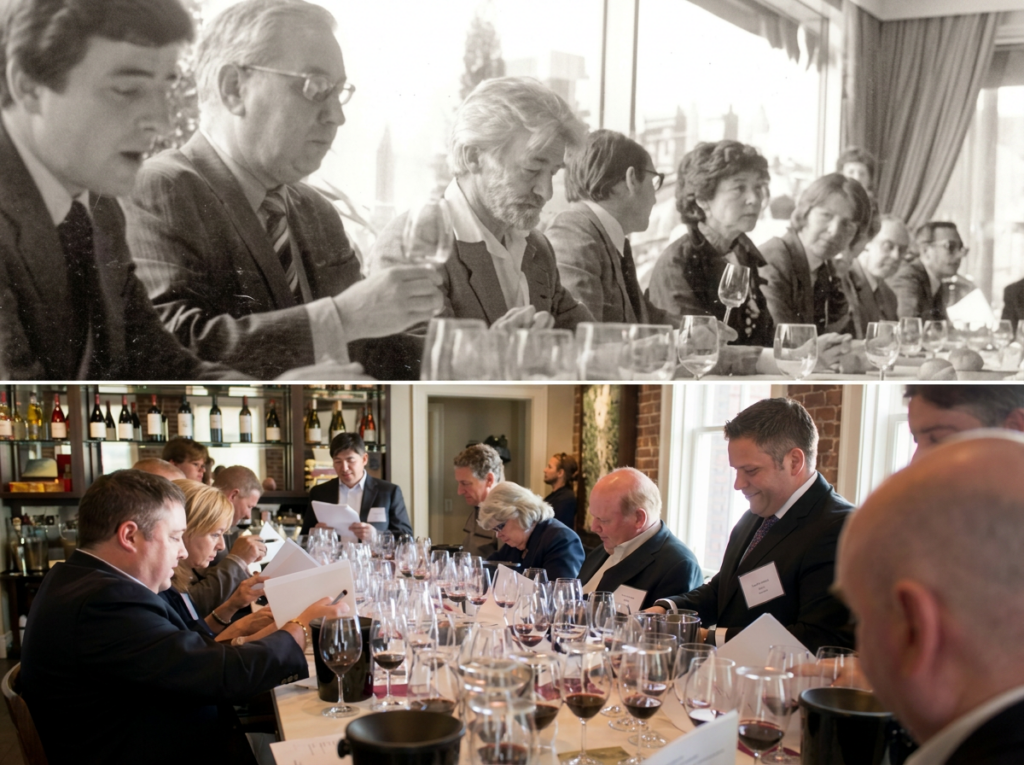
What became known as the “Judgment of Paris” brought together some of France’s most respected judges to taste elite Bordeaux and Burgundy wines alongside relatively unknown California Cabernet Sauvignons and Chardonnays. To the shock of the wine establishment, Napa Valley wines earned the top honors in both categories, proving that world-class wine could come from beyond the borders of France.
Fifty years later, the legacy of that tasting still reverberates across Napa Valley. The Judgment of Paris was more than an upset—it was a cultural turning point. It challenged assumptions, democratized excellence, and opened the global wine conversation to innovation, experimentation, and a new generation of winemakers.
At Mira Winery, that spirit of curiosity and fearless comparison has always resonated deeply with us.
Revisiting History Through the Judgment of Charleston
In 2016, on the 40th anniversary of the original Paris tasting, we set out to honor that landmark moment in our own way. At our Charleston tasting room, we hosted what became known as the “Judgment of Charleston,” a blind tasting that revisited the iconic Napa-versus-Bordeaux rivalry through a modern lens.
Our goal was not simply to recreate history. It was to ask an important question:
How had the wines—and the world’s perception of them—evolved over four decades?
The tasting assembled acclaimed wines from Napa Valley and Bordeaux, including multiple wines that had received perfect 100-point scores from critics. A distinguished panel of judges from across the country evaluated the wines blind, free from labels, reputation, or expectation.
The results reinforced something the original Judgment of Paris first revealed in 1976: great wine transcends geography.
The conversation was no longer about “Old World versus New World.” Instead, it became a celebration of craftsmanship, terroir, and individuality. Napa Valley had matured from an outsider into one of the world’s defining fine wine regions.
For Mira, participating in that conversation was profoundly meaningful.
Why Blind Tastings Still Matter
One of the enduring lessons of the Judgment of Paris is the value of blind tasting itself.
When labels disappear, wines must stand on their own merit. Reputation fades. Price becomes irrelevant. Origin becomes secondary. What remains is balance, complexity, texture, energy, and emotion.
Blind tasting is humbling. It reminds all of us—producers, critics, collectors, and consumers alike—that wine is ultimately about experience, not expectation.
That philosophy has long guided our approach at Mira Winery. We believe innovation and tradition are not opposites; they are partners. Respect for history should inspire exploration, not limit it.
The original Paris tasting rewarded courage. So did Charleston.
Napa Valley at 50 Years of Global Recognition
As the wine world commemorates the 50th anniversary of the Judgment of Paris, there is a renewed appreciation for the pioneers who helped elevate Napa Valley onto the world stage. Wineries involved in the original tasting are celebrating the milestone with commemorative releases and retrospectives that highlight just how transformative that event truly was.
But perhaps the greatest legacy of the Judgment of Paris is not the victory itself.
It is the idea that excellence can come from unexpected places.
That belief transformed Napa Valley in 1976. Today, it continues to inspire winemakers across the globe—from California to South America, Australia to South Africa, and beyond.
For us at Mira Winery, the Judgment of Charleston was our tribute to that enduring spirit: a reminder that wine remains at its best when approached with open minds, adventurous palates, and a willingness to challenge convention.
Fifty years after Paris, the conversation continues—and that is something truly worth celebrating.