

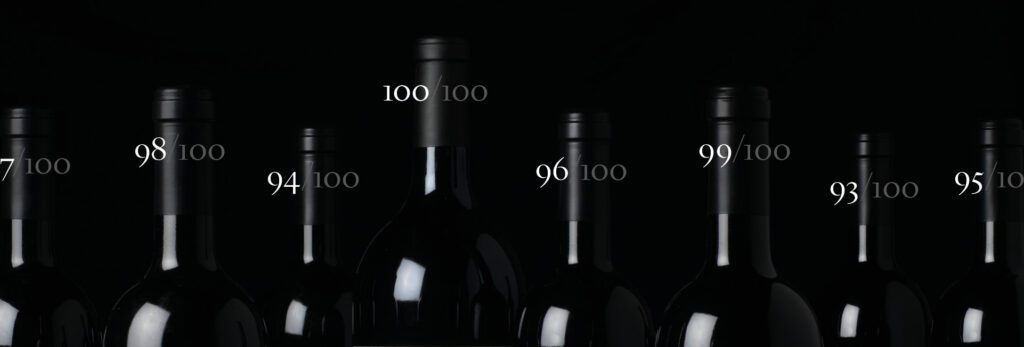
Wine Ratings: What They Really Mean When Selecting a Bottle
Walk into any fine wine shop or browse a collector’s list, and you’ll see numbers everywhere—92 points, 95 points, 100 points. Wine ratings have become a kind of shorthand for quality. But for enthusiasts and collectors, the more important question is not what the number is—it’s what the number actually tells you.
In regions like Napa Valley, where Cabernet Sauvignon is built for both immediacy and longevity, understanding ratings can help guide decisions—but only if you know how to interpret them.
The Basics: The 100-Point Scale
Most modern wine criticism uses the 100-point scale, popularized by critics like Robert Parker.
In general terms:
- 90–94 points: Outstanding, high-quality wines
- 95–99 points: Exceptional, often age-worthy wines
- 100 points: Rare, benchmark-level wines
Below 90, quality can still be very good—but the wine may be simpler, less structured, or less complex.
At a glance, ratings offer a quick signal. But they are only a starting point.
What a Rating Actually Reflects
A wine score is not just about how “good” a wine is. It reflects a critic’s evaluation of several structural and sensory elements:
- Balance (acidity, tannin, alcohol)
- Complexity and depth
- Length of finish
- Typicity (how well it reflects its style or region)
- Aging potential
For Napa Cabernet, higher scores often correlate with wines that show density, structure, and the ability to evolve over time.
But a 95-point wine is not objectively “better” than a 92-point wine for every drinker. It simply reflects a critic’s assessment at a specific moment.
Timing Matters: When the Wine Was Reviewed
One of the most overlooked aspects of wine ratings is timing.
Many wines are reviewed:
- Shortly after bottling
- Or even from barrel samples
At this stage, especially for structured Napa Cabernet, the wine may be:
- Tightly wound
- Dominated by primary fruit or oak
- Not yet fully integrated
A wine that scores 94 points upon release may evolve into something far more complex with time. Conversely, a wine that shows beautifully early may not develop as dramatically.
For collectors, this raises an important point:
A rating reflects a moment, not the full life of the wine.
Style Preferences and Critic Influence
Every critic has a palate.
Some favor:
- Richness and power
- Ripe fruit and intensity
Others prioritize:
- Restraint and balance
- Freshness and structure
This means a rating is also a reflection of style alignment.
Two wines from the same vintage in Napa Valley may receive similar scores but express completely different philosophies. One may be opulent and immediate, another restrained and built for decades.
Understanding who is giving the score is as important as the score itself.
Ratings vs. Personal Preference
For enthusiasts and collectors, the most valuable shift is moving from:
“What scores highest?”
to
“What aligns with my palate and cellar goals?”
Consider:
- Do you prefer wines that are approachable now or structured for long aging?
- Do you value power or precision?
- Are you building a collection or selecting a bottle for near-term enjoyment?
A 92-point wine that aligns with your taste may provide more satisfaction than a 98-point wine that does not.
Ratings and Ageability
Higher scores often correlate with wines that have the structure to age—but not always.
True longevity depends on:
- Tannin quality
- Acidity
- Balance
- Site expression
- Winemaking decisions
A wine built for aging may not show its full potential at the time of scoring. This is particularly true in Napa, where Cabernet Sauvignon can take years to fully integrate.
For collectors, it is often worth looking beyond the number to understand the wine’s structural intent.
How to Use Ratings Thoughtfully
Ratings are most useful when used as one input among many.
A thoughtful approach:
- Use ratings to narrow the field
Focus on well-made wines within a quality range. - Read the tasting notes
They often reveal more about style than the score itself. - Consider the producer and site
Consistency and terroir matter more than a single number. - Think about timing
When do you plan to drink the wine? - Trust your palate over time
Your preferences will become the most reliable guide.
A Final Perspective
Wine ratings offer clarity in a complex landscape. They can highlight quality, signal potential, and guide discovery.
But they are not definitive.
In Napa Valley—and especially for wines built with longevity in mind—the most meaningful qualities often reveal themselves slowly, over years in the cellar and hours in the glass.
At Mira, we believe a wine’s true value is not captured in a number, but in its ability to evolve, to express place, and to reward attention over time.
A rating can point you toward a bottle.
Understanding structure will tell you what that bottle can become. 🍷