

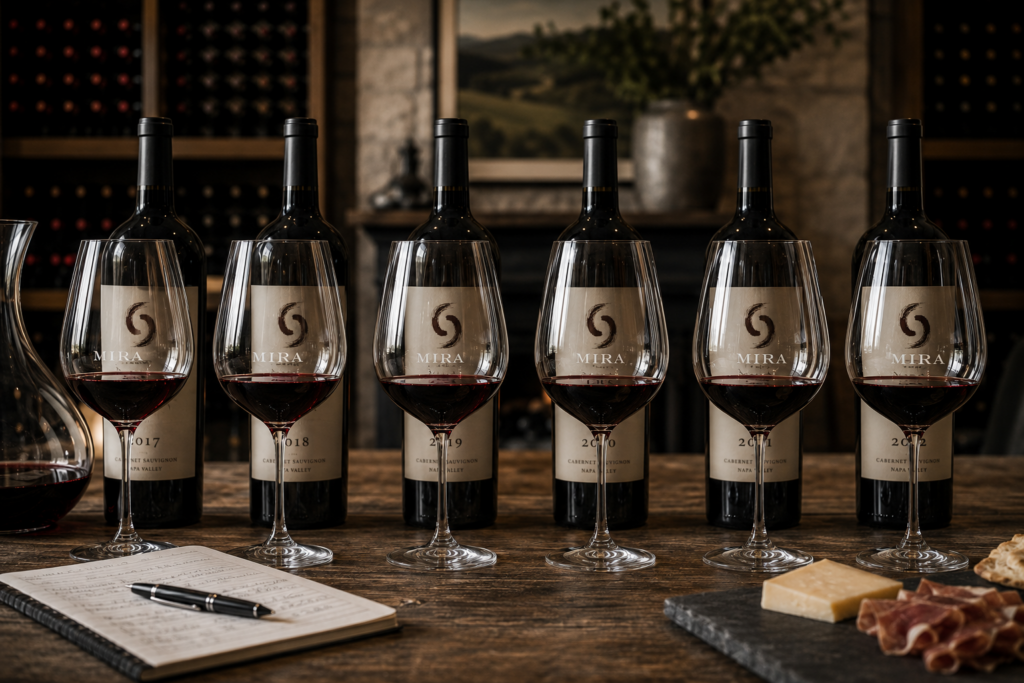
How to Host a Napa Vertical Tasting
There are few better ways to appreciate Napa Valley Cabernet Sauvignon than through a vertical tasting.
Unlike a traditional tasting that compares wines from different producers or vineyards, a vertical tasting explores multiple vintages of the same wine. By holding the vineyard and winemaking philosophy constant, the vintage itself becomes the story.
For enthusiasts and collectors, it's one of the most rewarding experiences in wine. Every bottle reveals how weather, growing conditions, and time shape the evolution of a great Cabernet Sauvignon.
Whether you're opening three vintages or ten, here's how to host a memorable Napa vertical tasting.
What Is a Vertical Tasting?
A vertical tasting features the same wine from multiple vintages.
For example:
- 2017 Cabernet Sauvignon
- 2018 Cabernet Sauvignon
- 2019 Cabernet Sauvignon
- 2021 Cabernet Sauvignon
Because the vineyard and producer remain consistent, subtle differences in structure, aromatics, and texture become much easier to recognize.
Rather than asking, Which wine is better?, the conversation becomes, How did each growing season influence the wine?
Choosing the Right Wines
Three to five vintages is ideal for most tastings. This provides enough contrast without overwhelming the palate.
If possible, include wines at different stages of development:
- A youthful vintage
- A vintage entering its drinking window
- A more mature vintage
This progression allows guests to experience how Cabernet Sauvignon evolves from vibrant fruit and firm tannins to the layered complexity that only time can create.
Serve Youngest to Oldest
The general rule is simple:
Taste from youngest to oldest.
Younger wines tend to have firmer tannins and more primary fruit, while older wines reveal softer textures and greater aromatic complexity.
Tasting in chronological order makes it easier to follow the wine's evolution.
Don't Forget the Glassware
Consistency matters.
Use the same style of glass for every wine so differences in aroma and texture come from the wine—not the stemware.
Allow each guest enough room to compare wines side by side. Seeing multiple vintages in the glass often reveals subtle differences in color and clarity before the first sip.
Serve at the Right Temperature
Cabernet Sauvignon shows best between 60–65°F.
Wines served too warm can feel heavy, while wines served too cold may hide their aromatics and structure.
If opening older vintages, stand the bottles upright for a day beforehand to allow sediment to settle.
Taste Before You Discuss
One of the joys of a vertical tasting is discovering how differently people experience the same wine.
Encourage guests to taste quietly before comparing notes.
Ask questions like:
- Which vintage feels the most structured?
- Which wine is the most expressive today?
- Which would you cellar for another decade?
- How has the fruit profile changed with age?
There are no wrong answers. The goal is observation, not consensus.
Pair Food Thoughtfully
Keep food simple so it complements rather than competes with the wines.
Excellent choices include:
- Aged cheeses
- Dry-cured meats
- Grilled beef tenderloin
- Mushroom dishes
- Rustic bread with olive oil
Avoid heavily spiced or overly sweet foods that can overwhelm Cabernet Sauvignon's structure.
Take Notes
Professional tasters rely on notes because memory fades.
Record impressions of:
- Aromatics
- Texture
- Tannin
- Acidity
- Finish
- Overall balance
Over time, these notes become invaluable references for future purchasing and cellaring decisions.
The Real Value of a Vertical
A vertical tasting teaches something that no critic's score or tasting note can fully capture.
It reveals how a wine changes with time.
Young vintages often showcase vibrant fruit, energy, and structure. As the years pass, those characteristics gradually evolve into notes of cedar, tobacco, graphite, leather, and dried herbs while the texture becomes increasingly seamless.
Watching that transformation unfold across multiple vintages offers a deeper appreciation not only for the wine, but for the patience required to craft and cellar it.
The Mira Philosophy
At Mira, we believe each vintage deserves to tell its own story.
Rather than pursuing absolute consistency, our goal is to preserve the character of each growing season while crafting wines with the structure to evolve gracefully over time.
That is why vertical tastings are so rewarding. They reveal not only the influence of the vintage, but also the enduring identity of the vineyard and the philosophy behind every bottle.
For collectors, few experiences are more satisfying than opening several vintages side by side and discovering how time has shaped each one.
Because great Napa Cabernet isn't static.
It continues to tell its story with every passing year.
Interested in hosting your own vertical tasting? Explore Mira's Library Collection and discover vintages that showcase how Napa Cabernet evolves over time.